
- Your cart is empty
- Continue Shopping


Precision DC Power Meter – Watt Meter and Power Analyzer with Powerpole Connectors

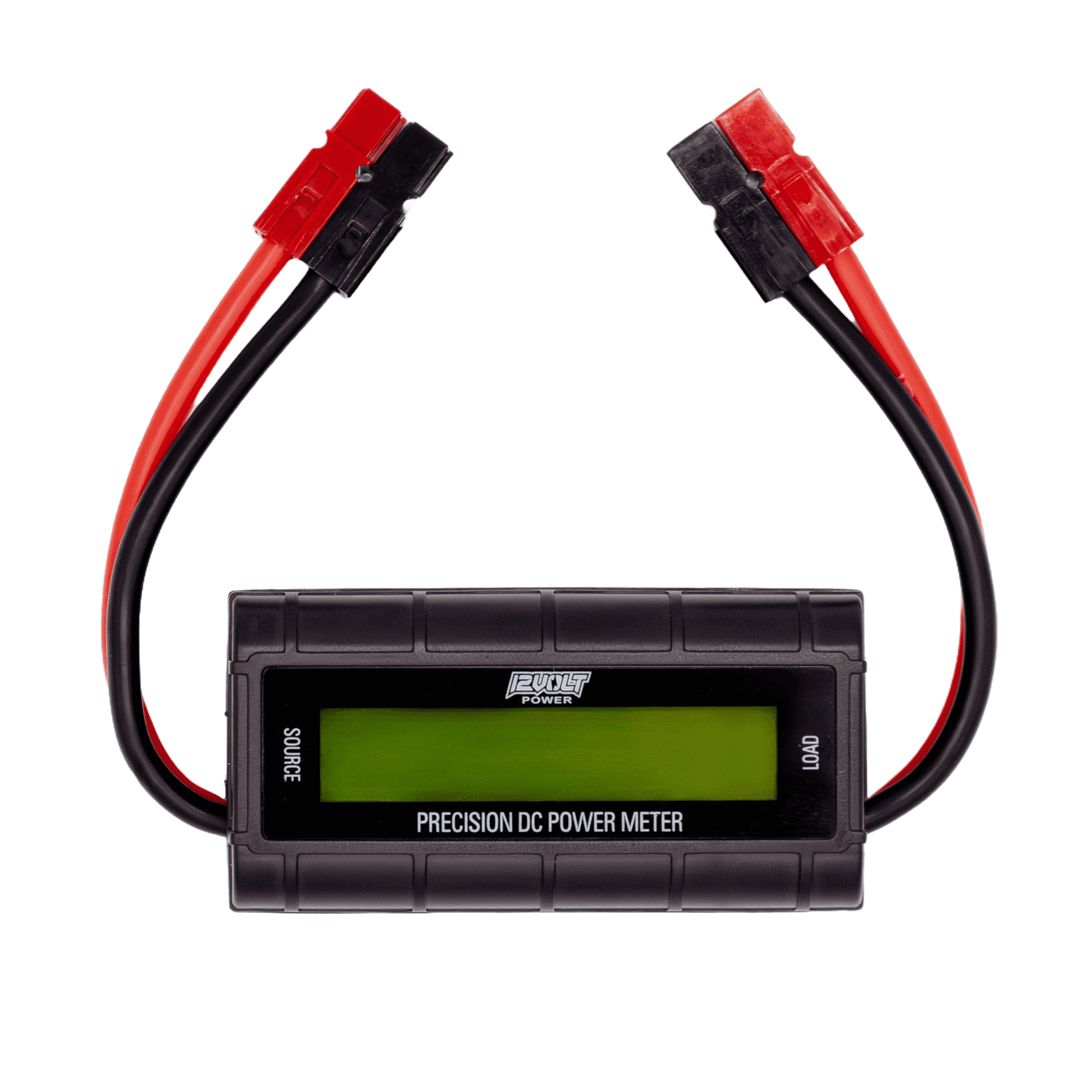
Precision DC Power Meter – Watt Meter and Power Analyzer with Powerpole Connectors
$0.00Current price is: $0.00. Original price was: $39.99.
Easy plug-and-play design with 12-gauge Powerpole leads and a bright green backlit LCD. Measures 8 parameters including volts, amps, watts, amp-hours, watt-hours, peak amps, voltage sag, and peak watts. No setup required—works automatically for accurate DC monitoring. Rated for up to 60V/100A.
This easy-to-use DC power analyzer is designed to monitor the eight critical electrical parameters for system safety and performance: Amps, Volts, Watts, Amp-hours, Watt-hours, Peak Amps, Minimum Voltage (Sag), and Peak Watts. With a measuring capacity of up to 60V and 100A, a high-contrast green backlit LCD, and automatic reset at startup, this watt meter is an essential tool for anyone working with batteries, solar panels, chargers, or DC power systems.
Installation Setup & Wiring
- Red source wire (+): Connect to positive battery/source terminal
- Black source wire (–): Connect to negative battery/source terminal
- Output leads: Connect to the DC load
- Unit comes with Anderson Powerpole connectors pre-installed
Watt Meter Display
Startup Screen: Each time power is applied (or auxiliary input is used), the meter resets Amp-hours, Watt-hours, Peak Amps, Minimum Volts, and Peak Watts to zero.
Real-Time Parameters:
- Amps (A): Average current draw
- Peak Amps (Ap): Maximum current since startup
- Volts (V): Average system voltage
- Minimum Volts (Vm): Lowest voltage (sag) since startup
- Watts (W): Average power (Amps × Volts)
- Peak Watts (Wp): Maximum power draw since startup
- Amp-hours (Ah): Total charge delivered
- Watt-hours (Wh): Total energy delivered
Values are shown on the green LCD screen, with key data displayed continuously and others cycling every second.
Auxiliary Power Connector (Optional)
- Allows accurate measurement down to 0V by powering the meter externally
- Improves accuracy since the meter does not consume power from the source/load circuit
- Uses only 2 of the 3 included wires (see housing for (+) and (–) markings)
Typical Applications & Connection Examples
- Load Testing: Connect between a DC source (battery, solar panel, or power supply 5–60V) and any DC load.
- Low Voltage (<5V) Testing: Use the auxiliary connector for precise measurements below 5V.
- Battery Charging: Place the battery on the load side when measuring charging current and capacity from a charger.
WARNING
High-power electrical systems can be dangerous. Always take proper precautions when working with batteries, chargers, or power supplies.
- Do not exceed rated specifications (60V / 100A)
- Avoid short circuits — risk of fire, explosion, or personal injury
- Ensure proper wire sizing for high current loads
- Misuse, overloading, or shorting the meter will cause damage and void the warranty
Only logged in customers who have purchased this product may leave a review.
| Specification Heading | Specification Detail |
|---|---|
| Voltage Range | 5-60V DC (0-60V DC w/ optional aux power) |
| Current Rating | 100A Max |
| Wire Gauge Size | 12AWG |
| Display Color | Green |
| Dimensions | 3.35" x 1.75" x 1.0" |
Related products


Solar Photovoltaic (PV) Wire
Price range: $12.76 through $476.65
Marine Grade Tinned Copper Lugs
Price range: $1.19 through $3.59
Victron Energy SmartShunt 500A
$100.30
Reviews
There are no reviews yet.